Português
 English
 Español
 Français
 Deutsch
 Italiano
 日本語
 العربية
 中文
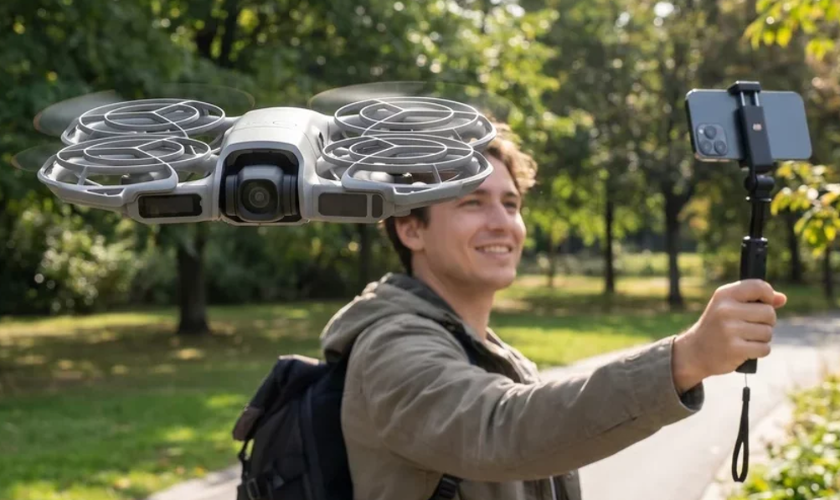
Updated November 6, 2026. This guide was fully rewritten after the two rule changes of mid-2026 (ANAC’s RBAC 100 and DECEA’s new ICA 100-40). Every item below was checked against the official texts, and each section says who to ask when the official sources do not settle a point.
The short answer is yes, tourists can fly drones in Brazil. The longer answer is that it is no longer a casual thing. Since July 1, 2026, every drone flight in Brazilian airspace needs an authorization through DECEA’s SARPAS NG system, including drones that weigh less than 250 g. Add a radio-equipment rule from ANATEL, a registration rule from ANAC, and the local rules of the place where you want to fly (national parks, islands, beaches, cities), and you can see why many visitors get it wrong. Fines, equipment seizure and a ruined trip are real outcomes.
This is the guide we send to agencies and travelers who ask us about it. Blumar is a Destination Management Company (DMC) based in Rio de Janeiro, with four decades operating in Brazil’s main destinations. We are not a law firm, so treat this as practical orientation and confirm the details with the official channels before each flight.
Brazil Drone Rules at a Glance (2026)
| Topic | What applies to a visitor | Who sets it |
|---|---|---|
| Airspace authorization | Required for every flight, even under 250 g. Request it on SARPAS NG for each flight. | DECEA, ICA 100-40 (in force since July 1, 2026) |
| Aircraft registration | Mandatory in SISANT above 250 g. Under 250 g the registration is formally waived, but SARPAS lists only drones that come from SISANT, so in practice it is needed. | ANAC, RBAC 100 (since June 16, 2026) |
| Radio approval | The drone and its remote control must be approved by ANATEL. | ANATEL |
| Maximum height | 120 m (400 ft) above ground level in the standard category. | RBAC 100 and ICA 100-40 |
| Line of sight | The drone must stay in the pilot’s direct view. | RBAC 100 |
| Distance from people | At least 30 m from people who are not involved in the flight. | RBAC 100 |
| Pilot theory exam | Free and online. Waived until December 31, 2026 and enforceable from January 1, 2027, for operations covered by RBAC 100 (non-recreational use above 250 g, or flights beyond the standard limits). | ANAC, Res. 805/2026 |
| Liability insurance | Required for operations under RBAC 100 (commercial work). Recreational flights within the standard limits are outside that rule. | ANAC, RBAC 100, section 100.37 |
| National parks, islands, Indigenous lands | Separate permissions and many outright bans. Check the place before the airspace. | ICMBio, FUNAI, local authorities |
What Changed in 2026
Most articles still online describe the old system. Two norms replaced it:
- June 16, 2026: ANAC’s new RBAC 100 (Resolution 805/2026) took over from the old RBAC-E 94. It organizes drone operations by risk (open, specific and certified categories) instead of by weight class. Read the RBAC 100 (ANAC, PDF).
- July 1, 2026: DECEA’s new ICA 100-40 (Ordinance 2,094/DNOR8) came into force. It ended the old exemption that let drones under 250 g fly low without authorization. Read the ICA 100-40 (DECEA, PDF).
- December 31, 2026: the temporary waiver of the ANAC theory exam ends. From January 1, 2027 the exam can be demanded in inspections for the pilots it covers.
The sentence to remember
ANAC does not require registration for a drone up to 250 g flown within 120 m and in sight, but DECEA requires an authorization for every flight, and the authorization system only shows drones that are registered in SISANT. For a traveler who flies outdoors, registration ends up being needed anyway.
The Four Layers You Need to Know
Flying a drone in Brazil involves three federal agencies, each in charge of one thing, plus a fourth layer that depends on the place. Understanding this split is the foundation of flying legally.
- ANAC (National Civil Aviation Agency) regulates the aircraft and the remote pilot: SISANT registration, the number displayed on the drone, the theory exam, operational categories and the insurance rule for commercial work.
- DECEA (Department of Airspace Control) regulates how you use the sky. It runs the SARPAS NG platform where each flight is requested and approved.
- ANATEL (National Telecommunications Agency) regulates the radio frequencies. The drone and its controller must carry ANATEL approval.
- The place adds ICMBio (federal parks and reserves), FUNAI (Indigenous lands), the Navy and Army (coastal and military areas), state agencies and city governments. This last layer is the one that surprises most travelers.
Step 1. Registration: SISANT and the Number on Your Drone
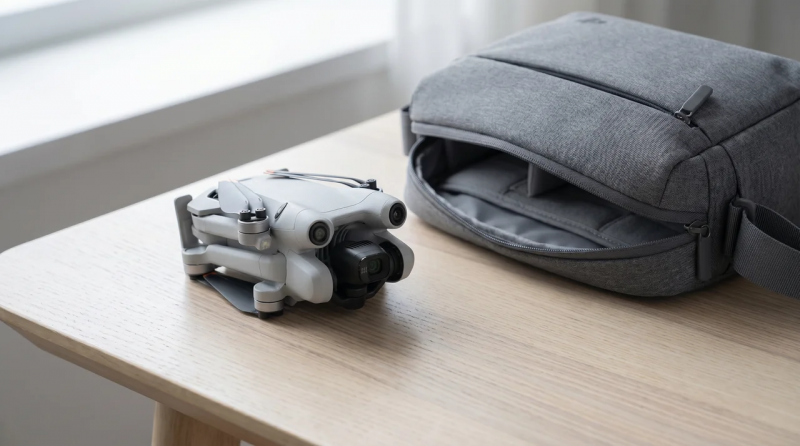
Photo: Irlen Menezes / Blumar DMC
SISANT is ANAC’s online drone registry. Registration is free and valid for 24 months. It produces a number that must be on the aircraft: PR- followed by digits for recreational use, and PP- for non-recreational use (work, paid filming, monetized content). The number must be readable on close visual inspection, outside the fuselage or in an internal compartment that opens without tools.
- Above 250 g: registration is mandatory.
- Up to 250 g: ANAC does not require it when you fly within 120 m and in sight. In practice you will want it anyway, because SARPAS NG only shows aircraft that come from SISANT through a synchronization button.
- What the rule asks for: only the registration number. Owner name, phone and QR code are good practice (they help if the drone is found), but they are not in the regulation.
Visiting from abroad? You can create the accounts, but do it before you travel
Brazilian residents sign in with a gov.br account and a CPF (taxpayer ID). For leisure flights, ANAC Resolution 806/2026 (article 24, paragraph 2) accepts registration with a passport or other valid travel document. Paid work under RBAC 100 is different: section 100.301(b) ties the registration to a person with a Brazilian CPF or CNPJ. Foreigners without a CPF have their own door on both official systems:
- ANAC (SISANT): the ANAC sign-in page offers “You are a foreigner and have no CPF? Sign in as external”.
- DECEA (SARPAS): the DECEA Accounts sign-in page offers “Request access for foreigners” for users who need a local account.
Both pages open in Portuguese (the DECEA page has a language selector), and a foreign account may need to be reviewed by the agency, so allow time: start at least three to four weeks before the trip, with your passport, the drone’s serial number and the invoice at hand. We have not published the exact document lists because they are set by ANAC and DECEA and can change. If something blocks you, ask the DECEA service desk and ANAC (phone 163 in Brazil), or use a licensed local operator.
Our free tool SISANT Drone Label Generator creates the registration label in the correct format, and the step-by-step guide to registering is here: SISANT registration step by step (in Portuguese). If you want to check what an inspector may ask for, try the Drone Inspection Simulator, a free chat that plays the role of a federal inspector and tells you what is missing.
Step 2. ANATEL: Radio Approval for the Drone and the Remote
Every drone and controller operated in Brazil must be approved by ANATEL. Units sold by authorized Brazilian retailers (DJI, Autel, Skydio and others) already come approved. A drone bought abroad may have the same hardware but not the Brazilian approval.
- The “own use” approval is written for residents: Resolution 715/2019, article 20, paragraph 1, limits the request to individuals living in Brazil or Brazilian companies. For visitors, article 88, sole paragraph, lets a resident abroad in transit use portable equipment from “personal systems” that is certified by a foreign administration and compatible with Brazilian rules. The text does not mention drones, and we found no ANATEL statement applying it to them. Before you travel, send the brand, model, foreign certification and dates to certificacao@anatel.gov.br, and carry the reply with you.
- Keep the invoice and the manufacturer’s compliance documents with you, and show them if asked.
- Put the ANATEL label on the drone. Our ANATEL Drone Label Generator builds it for free.
More detail, in Portuguese: how to know if your drone is ANATEL-approved, how to approve a drone and what to do if a drone is held at customs.
Step 3. SARPAS NG: The Authorization for Every Flight
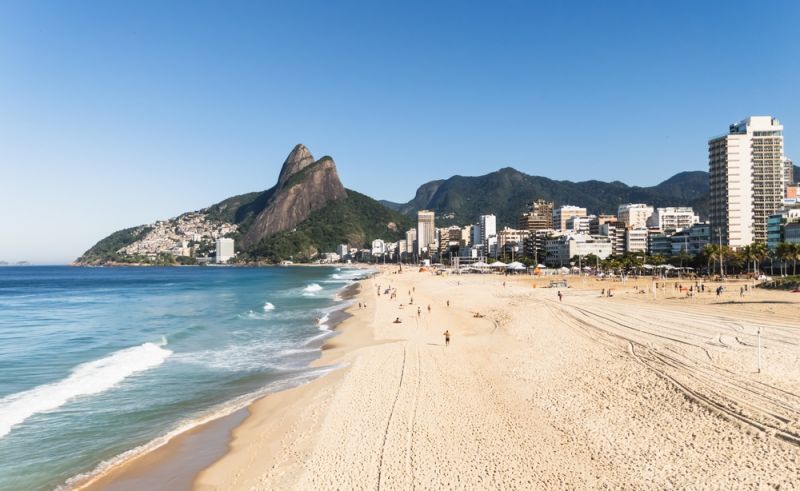
Photo: Felipe Mendonca photos / Shutterstock.com
Under ICA 100-40, no unmanned aircraft enters Brazilian airspace without authorization, and article 19 says this applies including to aircraft up to 250 g. The authorization is requested on SARPAS NG, DECEA’s platform. You draw the area, set the height and time, and the system checks your polygon against airport zones, restricted areas and other flights.
How the approval works
- Standard flights (open category, up to 120 m, no conflict with restricted areas): request at least 30 minutes before. Approval is usually fast.
- Flights that cross an airport restriction zone (FRZ) or another restricted area: at least 4 days in advance, and a coordination term with the airport or air traffic unit is mandatory.
- Beyond line of sight, above 120 m, or aircraft above 25 kg: at least 8 days in advance.
- A request cannot be made more than 90 days ahead.
The map colors show the level of coordination, not whether you need to ask. Green means a simple request, yellow means coordination and a longer wait, red means not allowed. In every color the request is still required.
The only exemption
The one formal exemption is a recreational flight inside a conditioned airspace created for recreation (for example an official model-aircraft field), up to 60 m high and 300 m away. Beaches, parks, hotels and farms are not that. Flying indoors in a closed space is also outside the airspace rules.
Airports and heliports
Operating near an aerodrome without authorization is treated by the regulation as an act of unlawful interference against civil aviation, which is why this is the part to take most seriously. Several Brazilian tourist cities have airports right next to the postcard views: Rio de Janeiro (Santos Dumont, Galeão, Jacarepaguá), São Paulo (Congonhas), Florianópolis, Salvador, Recife and others. The map in the app does the real calculation, and you can read the technical explanation here: FRZ, EAC and ZAD explained (in Portuguese) and minimum distance from airports (in Portuguese).
Tools that make it easier
- SARPAS NG request service (gov.br): where the authorization is requested.
- SARPAS Lite, the free DECEA app (Android, and on iPhone since August 2026), shows the airspace map and lets you run an adequacy check of your area before you request. How it works (in Portuguese).
- Our free Flight Window tool reads the weather for the day and place of your flight. How to use it.
- Two plain-language guides: SARPAS or SISANT, what is the difference and how long approval takes.
The pilot in command must also know how to reach the SARPAS duty desk and notify it immediately if the drone is lost (a fly-away). The number published by DECEA at the time of writing is +55 21 2101-6986, for emergencies only. More on the fly-away procedure.
Step 4. Flying Rules in the Air
- Line of sight: keep the drone in your unaided view. A screen or binoculars do not replace it.
- Height: up to 120 m (400 ft) above ground level in the standard category. Details on height limits.
- People: keep at least 30 m from people who are not involved in the flight. What the 30 m rule means in practice.
- Weather: do not fly in rain, strong wind or fog, or in any condition that puts the operation at risk. Consult the weather before you request authorization.
- Plan for failure: define where the drone goes if the link is lost, and avoid flying over crowds, roads and busy beaches.
Which rules apply to which type of visitor
| Visitor profile | Registration | SARPAS | Pilot exam | Insurance |
|---|---|---|---|---|
| Recreational, drone up to 250 g, within 120 m and in sight | Formally waived; needed in practice for SARPAS | Yes, every flight | No | Not required |
| Recreational, drone above 250 g, within 120 m and in sight | SISANT with passport, PR- number | Yes, every flight | No | Not required |
| Paid or commercial work (filming, content creation, production), above 250 g or beyond the standard limits | SISANT with CPF or CNPJ, PP- number | Yes, every flight | Yes (waived until Dec 31, 2026) | Required (RBAC 100, 100.37) |
| Paid work with a drone up to 250 g, within 120 m and in sight | Formally waived; needed in practice for SARPAS | Yes, every flight | No | Not required |
Foreign certificates are not recognized: the RBAC 100 does not provide for validating a foreign remote pilot certificate, and we found no rule that exempts a visiting pilot from the ANAC exam when the exam applies. If you plan to shoot for a client, a commercial production or a paid campaign, the safest and fastest path is a local licensed operator. Part 107 and EASA A1/A3: do they count in Brazil? (in Portuguese). For commercial operations, the risk assessment is built with our free ARO tool.
Where You Can and Cannot Fly: Brazil’s Iconic Places
| Place | Casual tourist flight? | Why |
|---|---|---|
| Christ the Redeemer (Corcovado, Tijuca National Park) | No | The park’s visitation protocol does not allow recreational drone use at Corcovado. Controlled airspace and helicopter routes add more layers. |
| Sugarloaf Mountain and Praia Vermelha | Treat as no | Dense helicopter traffic, cable car, the Santos Dumont airport zone and military presence. Only coordinated professional operations. |
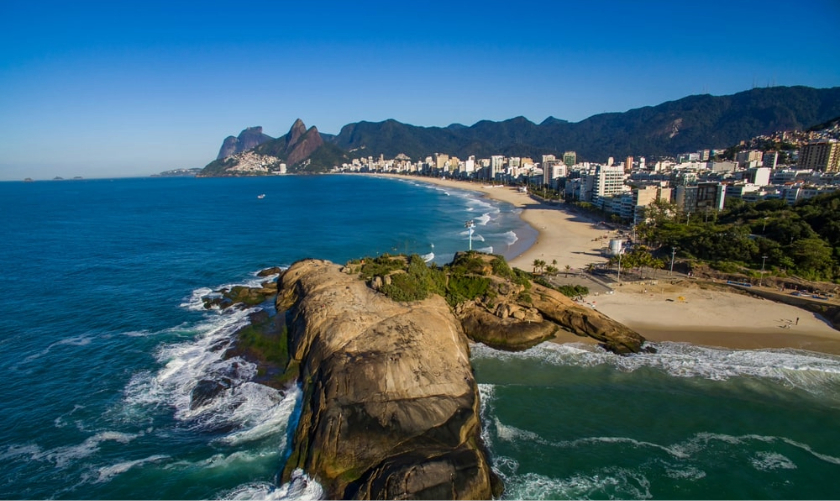
| Rio de Janeiro beaches and the city | Only with SARPAS | Santos Dumont, Galeão and Jacarepaguá create restriction zones over most of the Zona Sul. |
| Fernando de Noronha: Marine National Park | No | As a rule, drone use is reserved for research and scientific outreach, with ICMBio authorization. |
| Fernando de Noronha: Environmental Protection Area | Possible | No ICMBio authorization needed, but SARPAS, ANAC and ANATEL rules apply. Commercial filming needs an ICMBio authorization. |
| Iguaçu Falls (Iguaçu National Park) | No | ICMBio Ordinance 956/2026 bans recreational drone use across the whole park. |
| Other national parks and reserves | Check each one | Each unit sets its own rule. Some allow recreational use with conditions, others ban it. |
| Indigenous lands | Only with authorization | Entry and filming need FUNAI authorization and the community’s consent. |
| Military areas, prisons, critical infrastructure | Prohibited | Never fly over or near them. |
Christ the Redeemer

Photo: marchello74 / Shutterstock.com
Christ the Redeemer sits on Corcovado inside Tijuca National Park, under controlled airspace and in the path of helicopters. The park’s visitation protocol states that recreational drone use is not permitted at Corcovado. Professional filming is possible only after ICMBio authorization and the airspace approval, and it is worth hiring an operator who has already done it. Rio’s overlapping airport zones are explained in this guide: flying a drone in Rio de Janeiro, 12 landmarks (in Portuguese).
Sugarloaf Mountain

Photo: Skreidzeleu / Shutterstock.com
Sugarloaf shares the same problems: frequent helicopter traffic, the cable car, the Santos Dumont airport zone and military presence in the area. We do not know of any route for a casual tourist flight at Sugarloaf or Praia Vermelha. Authorized flights need coordination and an experienced operator.
Fernando de Noronha
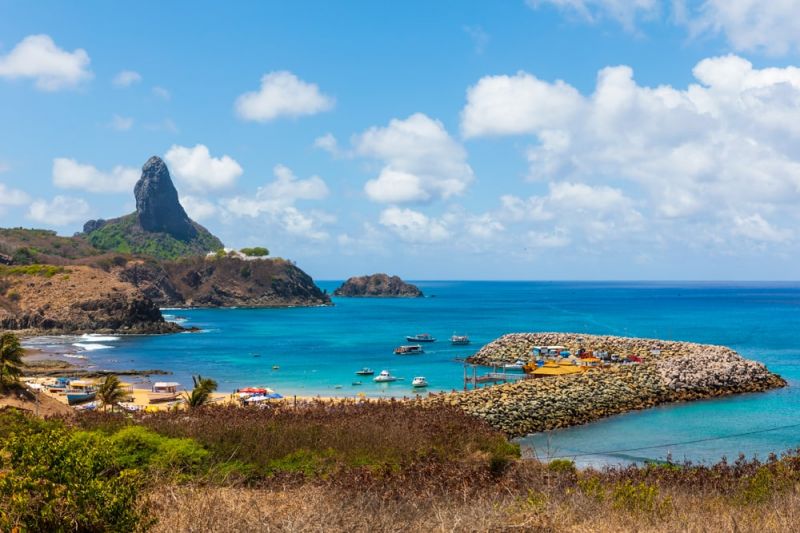
Photo: Reuber Duarte / Shutterstock.com
The archipelago is split in two protected areas. The Marine National Park (about 70% of the archipelago, including Baía do Sancho, Baía dos Porcos and Praia do Leão) is closed to recreational drones. In the Environmental Protection Area (which includes Conceição, Boldró, Meio and Cachorro beaches) no ICMBio permit is needed for a recreational flight, but ANAC, DECEA and ANATEL rules still apply. Know which one you are in before you launch. Full Noronha drone guide (in Portuguese) and our own first-timer’s guide to Noronha.
Iguaçu Falls and other national parks
ICMBio Ordinance 956/2026 prohibits recreational drones across the whole Iguaçu National Park. Use is limited to management, protection, research, monitoring and institutional outreach, always with prior authorization. Other parks have their own rules, and the safest habit is to ask the park administration weeks before you travel: Iguaçu Falls (in Portuguese), Lençóis Maranhenses, Chapada Diamantina, Pantanal and Jericoacoara.
Federal rules on filming in protected areas changed in 2025 (ICMBio Normative Instruction 12/2025): filming where and when the public is already allowed, without disturbing visitors, needs no special authorization, but it does not release the drone itself from the unit’s own rules. When a unit has specific rules for equipment like drones, a free Special Authorization is requested on gov.br.
Beaches and cities
Photo: Augusto Miranda / MTur
Most large Brazilian cities have an airport close to the beaches, so the airport restriction zone often covers the sand. Copacabana, for example, lies in the area of Santos Dumont. Expect every beach flight in a capital to need a SARPAS approval, and in some cases a coordination term. Guides in Portuguese for popular spots: beaches in general, Florianópolis, São Paulo, Brasília, Fortaleza and public parks and squares.
Indigenous lands
Flying over or into an Indigenous territory needs authorization from FUNAI and respect for the community. Rules for entering and filming change by territory, so contact FUNAI first. What the law allows (in Portuguese).
Events, crowds and temporary restrictions
Large events, parades, stadiums and visits by authorities can create temporary restrictions that do not appear on a static map. Carnival, New Year’s Eve and the national parade days are the usual examples. Check the app on the day, and never fly over a crowd.
Bringing Your Drone to Brazil
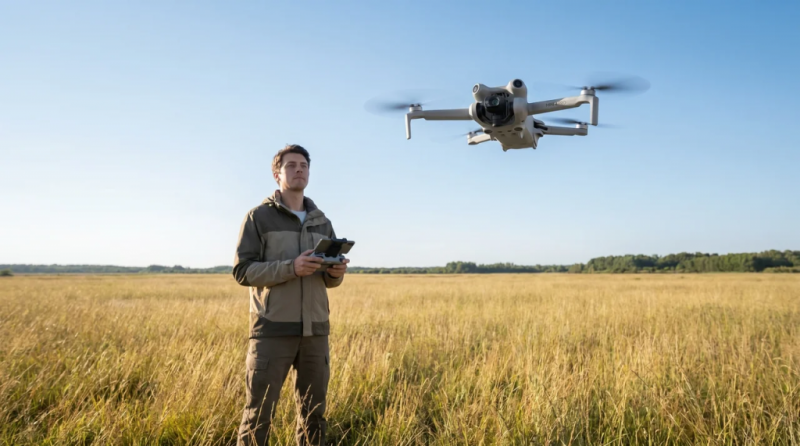
Photo: Irlen Menezes / Blumar DMC
- Customs: Brazilian customs guidance treats a drone for strictly recreational use as personal baggage under a special tax regime. Non-recreational use follows the ordinary import regime. Non-residents must list temporarily admitted goods in the electronic declaration (e-DBV) when the total passes US$ 3,000. Carry the original invoice either way.
- ANATEL: see Step 2. A model sold abroad can differ from the Brazilian version.
- Batteries on the plane: spare lithium batteries go in the cabin, never in checked baggage. Up to 100 Wh each is the normal limit; between 100 and 160 Wh you need the airline’s approval; above 160 Wh is not allowed on passenger flights. Most consumer drone batteries are below 100 Wh. Ask your airline before you fly. Flying with a drone and batteries (in Portuguese).
- Travel insurance: check whether your policy covers the drone abroad and any damage to third parties.
- Manufacturer apps: the no-fly warnings in a brand’s app are not the Brazilian authorization. DJI has been replacing its hard no-fly zones with warning zones, which makes it easier for the app to let you fly where the law does not. The legal restriction is SARPAS. What changed in the DJI geofencing (in Portuguese).
Penalties for Flying Without Authorization
Depending on the case, an irregular flight can lead to an ANAC fine, interruption of the flight, apprehension of the equipment, environmental sanctions in protected areas, and, near airports, an accusation of interference with civil aviation. ANAC’s fine table is in Resolution 762/2024, and there is no single amount for “flying a drone illegally”: it depends on the infraction. Be skeptical of articles that quote a fixed fine for everything. We explain the real structure here: how much an irregular drone flight costs (in Portuguese) and what an inspector can ask for.
Five Myths That Cause Fines
- “Under 250 g needs nothing.” Not anymore. The authorization requirement now covers every drone.
- “Green on the map means I can fly freely.” Green means a simple request, not no request.
- “A beach far from an airport is free.” The place may be a protected area, a municipal reserve or under another restriction.
- “The app let me take off, so it is legal.” A manufacturer’s app is not a Brazilian authority.
- “My foreign license is valid here.” There is no mutual recognition of drone licenses.
For Agencies and Tour Operators: A Briefing You Can Copy
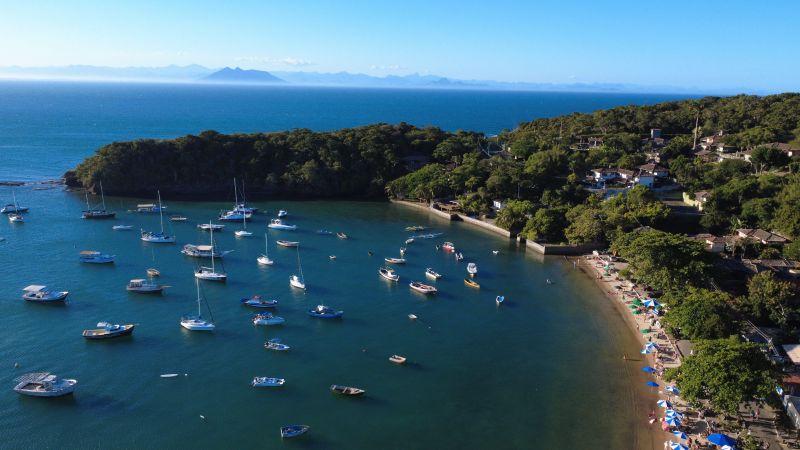
Photo: Irlen Menezes / Blumar DMC
If your clients ask whether they can bring a drone to Brazil, this short briefing is accurate as of November 6, 2026. Adapt it freely and link back to this page.
Client briefing: drones in Brazil
- Every drone flight in Brazil needs an authorization from DECEA through SARPAS NG, even for small drones.
- The drone and remote must be approved by ANATEL. Drones bought abroad may not be.
- Registration with ANAC is mandatory above 250 g and, in practice, needed for the authorization system.
- Leisure flights can be registered with a passport; paid work under RBAC 100 needs a Brazilian CPF or CNPJ. Foreigners without a CPF can request access to the ANAC and DECEA systems through the “external” and “foreigner” options on the sign-in pages. Start three to four weeks before the trip, or hire a licensed local operator.
- Many iconic places are closed to casual flights: Christ the Redeemer, Sugarloaf, Iguaçu Falls and the Marine National Park of Fernando de Noronha.
- Batteries travel in the cabin, with the airline’s approval above 100 Wh.
- Fines, equipment seizure and legal trouble are possible. When in doubt, do not fly.
What to ask a local drone operator
- The operator’s SISANT number (PP-) and the drone’s ANATEL approval.
- The SARPAS authorization protocol for the exact place, height and time.
- Liability insurance for the operation.
- Any ICMBio, FUNAI or city authorization needed for the location, and who requests it.
- Image rights and releases for people who may appear in the footage.
Timing matters. Authorizations near airports and in protected areas take days, and some parks ask for ten working days. Start the process at least three weeks before the shoot and have a plan B for the date.
How Blumar DMC Can Help
Blumar coordinates professional aerial photography and videography for itineraries across Brazil through licensed drone pilots who hold the required permits. We also advise on what is feasible at each destination before the itinerary is sold. To discuss a project, use the Blumar DMC contact page or explore our Brazil destinations.
Free Tools and Official Sources
Free tools for drone pilots
- SISANT Drone Label Generator: the ANAC registration label.
- ANATEL Drone Label Generator: the ANATEL label.
- Drone Inspection Simulator: a mock inspection that tells you what is missing.
- Flight Window: weather for the day and place of the flight.
- Operational Risk Assessment (ARO) generator: for commercial operations.
- QR Code for drone documents: carry the papers an inspector may ask for.
- Drone exam practice test: for the ANAC theory exam.
- Brazil Drone Observatory: independent data on registered drones. At the last check, the registry had about 190,000 drones.
- All drone tools in one place.
Official sources
- ICA 100-40, 2026 edition (DECEA)
- RBAC 100 (ANAC)
- SISANT registration service (gov.br)
- SARPAS NG authorization service (gov.br)
- ANATEL own-use import approval
- ICMBio and Fernando de Noronha National Park
- Brazilian Federal Revenue traveler’s guide
About Blumar DMC
Blumar is a Destination Management Company (DMC) and inbound tour operator headquartered in Rio de Janeiro, with four decades of experience delivering leisure travel, group tours, incentive programs and events throughout Brazil. The company is a member of Virtuoso, BLTA, IGLTA, IATA and USTOA.
The drone regulation content in this guide was developed with the technical blog irlenmenezes.com.br, maintained by a registered SISANT drone pilot and professional aerial photographer who is part of the Blumar Group. To learn more, visit Blumar’s corporate profile.
This content is informational and is not legal advice. Rules change; the last review of this page was on November 6, 2026. Confirm the current requirements with ANAC, DECEA, ANATEL and ICMBio before each flight.
Posts you might also be interested in:
- Double the Natural Beauty: Discover Destinations That Delight Twice as Much
- Trip to Fernando de Noronha: The Essential First-Timer’s Guide
- The Best Places to Watch the Sunset in Rio de Janeiro
- Best Family-Friendly Destinations in Northeast Brazil
- Discover the Best Ecotourism Destinations in Brazil with Blumar DMC
FAQ – Can I Fly a Drone in Brazil in 2026? Rules for International and Brazilian Tourists
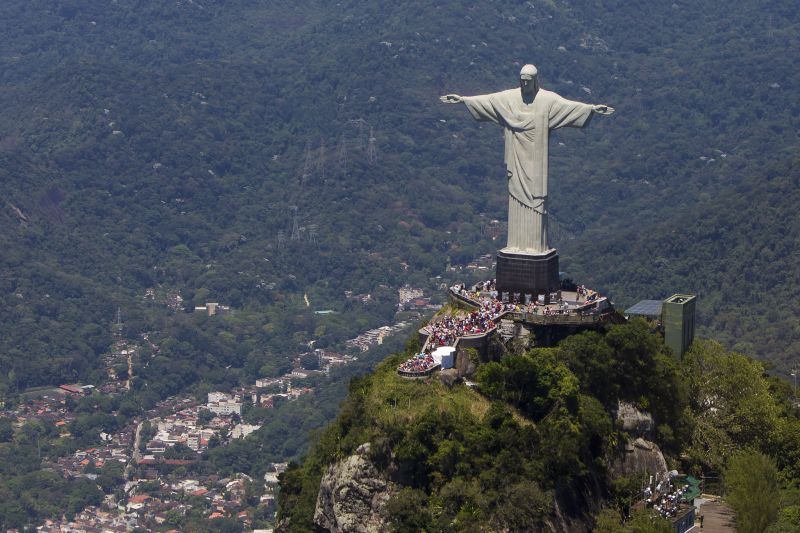
Photo: Luciola Vilella / MTur
1. Can tourists fly drones in Brazil in 2026?
Yes, but every flight needs an authorization from DECEA through SARPAS NG, the drone needs ANATEL approval, and drones above 250 g need ANAC registration. The place also matters: many iconic locations are closed to casual flights.
2. Do I need authorization for a drone under 250 g?
Yes. Since July 1, 2026, ICA 100-40 requires an authorization request for every unmanned aircraft, including those up to 250 g. The old exemption for light drones no longer exists.
3. Which authorities regulate drones in Brazil?
ANAC regulates the aircraft, registration, the pilot exam and insurance. DECEA regulates airspace and runs SARPAS NG. ANATEL regulates radio equipment. ICMBio, FUNAI, the Navy and local governments regulate specific places.
4. Do I need to register my drone with ANAC?
Above 250 g, yes: registration in SISANT is mandatory, free and valid for 24 months. Up to 250 g, ANAC waives it when you fly within 120 m and in sight, but SARPAS only lists drones synchronized from SISANT, so in practice you will want it.
5. What is SISANT?
SISANT is ANAC’s online drone registry. It generates a registration number (PR- for recreational use, PP- for non-recreational use) that must be on the aircraft.
6. What is SARPAS NG?
SARPAS NG is DECEA’s platform for requesting authorization to use the airspace. You draw the flight area, choose height and time, and the system checks it against airport zones and restricted areas.
7. How far in advance must I request SARPAS authorization?
At least 30 minutes for a standard flight, 4 days when the flight crosses an airport zone or restricted area, and 8 days for flights beyond line of sight, above 120 m or with aircraft above 25 kg. Requests cannot be made more than 90 days ahead. Foreign visitors should set up their ANAC and DECEA accounts weeks before the trip.
8. Can a foreign tourist without a Brazilian CPF register a drone or request SARPAS?
For leisure flights, yes: ANAC Resolution 806/2026 accepts a passport or other valid travel document. For paid work under RBAC 100, section 100.301(b) asks for a Brazilian CPF or CNPJ. The ANAC sign-in page has an option for foreigners without a CPF (“sign in as external”), and the DECEA Accounts page has “Request access for foreigners”. The pages open in Portuguese and a foreign account may need review by the agency, so start three to four weeks before the trip and ask DECEA or ANAC if something blocks you.
9. Does my drone need ANATEL approval?
Yes. The drone and its remote control must be approved by ANATEL. Units sold in Brazil already are. Resolution 715/2019, article 88, has a rule for residents abroad in transit, but it does not mention drones, so ask ANATEL before you travel.
10. What changed with ICA 100-40 in 2026?
The new edition has been in force since July 1, 2026. It requires authorization for every aircraft, including those up to 250 g, unifies the old rules for recreational and special operations, and sets deadlines of 30 minutes, 4 days and 8 days for requests.
11. What is RBAC 100?
It is ANAC’s new drone regulation (Resolution 805/2026), in force since June 16, 2026. It replaced RBAC-E 94 and classifies operations by risk into open, specific and certified categories.
12. What is the maximum altitude?
120 meters (400 feet) above ground level in the standard category. Some areas have lower limits, and flights above 120 m need a different category and a longer SARPAS lead time.
13. Must I keep the drone in line of sight?
Yes. The drone must stay within the pilot’s direct, unaided view. Screens and binoculars do not replace it.
14. Is there a minimum distance from people?
Yes. Keep at least 30 meters (about 98 feet) from people who are not involved in the flight.
15. Can I fly near airports?
Not without authorization. Airport zones need an approved SARPAS request and, in many cases, a coordination term. Flying near an aerodrome without authorization is treated as interference with civil aviation.
16. Is there anywhere I can fly without asking for authorization?
Practically no. The only formal exemption is a recreational flight inside an airspace created for recreation, up to 60 m high and 300 m away. Beaches, parks, hotels and farms are not covered.
17. Can I fly a drone at Christ the Redeemer?
For tourists, no. The monument is on Corcovado, inside Tijuca National Park, under controlled airspace and helicopter routes. The park’s visitation protocol does not allow recreational drone use there.
18. Can I fly a drone at Sugarloaf Mountain?
No for casual flights. The area has heavy helicopter traffic, the cable car, the Santos Dumont airport zone and military presence. Only coordinated professional operations are possible.
19. Can I fly a drone in Fernando de Noronha?
In the Marine National Park, recreational flights are not allowed; drone use is for research and scientific outreach with ICMBio authorization. In the Environmental Protection Area, no ICMBio permit is needed for a recreational flight, but SARPAS, ANAC and ANATEL rules apply.
20. Can I fly a drone at Iguaçu Falls?
No for recreation. ICMBio Ordinance 956/2026 bans recreational drone use in the whole Iguaçu National Park.
21. Can I fly a drone on Brazilian beaches?
It depends. Many city beaches lie in airport restriction zones and need an approved SARPAS request. Some beaches are also inside protected areas. Check the map and the local rules on the day.
22. Can I fly in national parks?
Each park has its own rule. Some allow recreational use with conditions, others ban it. Ask the park administration weeks ahead.
23. Can I fly over Indigenous territories?
Only with authorization from FUNAI and respect for the community’s rights and wishes.
24. Where is drone flight strictly prohibited?
Over or near military facilities, prisons and critical infrastructure, and in areas under temporary restriction. Do not fly over crowds.
25. Can I bring my drone into Brazil as a tourist?
Yes. Customs guidance treats a drone for strictly recreational use as personal baggage under a special regime. Carry the invoice, check ANATEL status, and declare the equipment if your total goods pass US$ 3,000.
26. Can I take drone batteries on the plane?
Spare lithium batteries go in the cabin, never in checked baggage. Up to 100 Wh is the usual limit, between 100 and 160 Wh needs the airline’s approval, and above 160 Wh is not allowed on passenger flights. Ask your airline before you fly.
27. Do I have to take the ANAC theory exam as a tourist?
The exam applies to remote pilots under RBAC 100, such as non-recreational operations above 250 g or flights beyond the standard limits. It is free and online, waived until December 31, 2026 and enforceable from January 1, 2027. Recreational flights within the standard limits are outside that rule. We found no recognition of foreign licenses.
28. Is RETA insurance mandatory?
Liability insurance is required for operations under RBAC 100, such as commercial aerial photography and filming. Recreational flights within 120 m and in sight are outside that rule. Insurance for your own equipment is a separate matter.
29. Can I sell photos or videos made with my drone?
Commercial use is non-recreational. It needs a PP- registration, the SARPAS authorization, and liability insurance, and the theory exam will be enforced from January 1, 2027.
30. What happens if I fly without authorization?
You can be stopped, fined by ANAC, have the equipment apprehended, and face environmental sanctions in protected areas. Near airports it can be treated as interference with civil aviation.
31. What is a fly-away and what should I do?
A fly-away is a loss of control in which the drone no longer follows the pilot or its programmed failsafe. The pilot must notify the SARPAS duty desk immediately with the last known position, height, speed and battery time.
32. Can I rely on the DJI app to tell me where I can fly?
No. The app’s warnings are not the Brazilian authorization, and DJI has been turning hard no-fly zones into warning zones. The legal restriction comes from SARPAS and from the rules of the place.
33. What is the best way to get drone footage of Christ the Redeemer or Sugarloaf?
Hire a licensed local operator who already holds the authorizations. It is the safest and fastest option, and Blumar DMC can coordinate it for your itinerary.
34. Is it worth bringing a drone to Brazil?
Yes, if you plan ahead. Brazil has some of the world’s best landscapes for aerial work, but the authorizations take time and some of the most famous places are closed. Many travelers do better by hiring a local operator for one special shoot.
35. How can Blumar DMC help?
Blumar DMC helps international travelers, tour operators and event organizers by coordinating professional aerial filming through licensed pilots with the required authorizations, and by advising on where aerial filming is feasible across Brazil.