Português
 English
 Español
 Français
 Deutsch
 Italiano
 日本語
 العربية
 中文

Brazil is one of the most rewarding destinations you can put in front of a group, and one of the least forgiving to operate from abroad. Distances behave like a continent, suppliers change city by city, and the difference between a program that flows and one that unravels usually comes down to a single decision: which DMC in Brazil you trust with the ground. This guide is written for tour operators, travel advisors and meeting and incentive planners who are about to make that decision. It covers what a destination management company actually does, why Brazil rewards local expertise more than most destinations, how to vet a partner with seven concrete criteria, the red flags that should end the conversation, and the lead times that protect your budget.
In short: a DMC in Brazil is a local company that designs, contracts and operates travel programs on the ground for operators, advisors and planners based elsewhere. The right one gives you a single accountable partner for hotels, transport, guides, venues, experiences and 24/7 on-site support across a country larger than the contiguous United States. To choose well, check seven things: in-house operations, nationwide coverage, a real 24/7 emergency line, documented supplier vetting, clear contracts and invoicing, language fluency and verifiable references. Engage your DMC 9 to 12 months ahead for incentives, 12 to 24 months ahead for large congresses, and 12 to 18 months ahead for Carnival or New Year's Eve in Rio.
What is a DMC in Brazil?
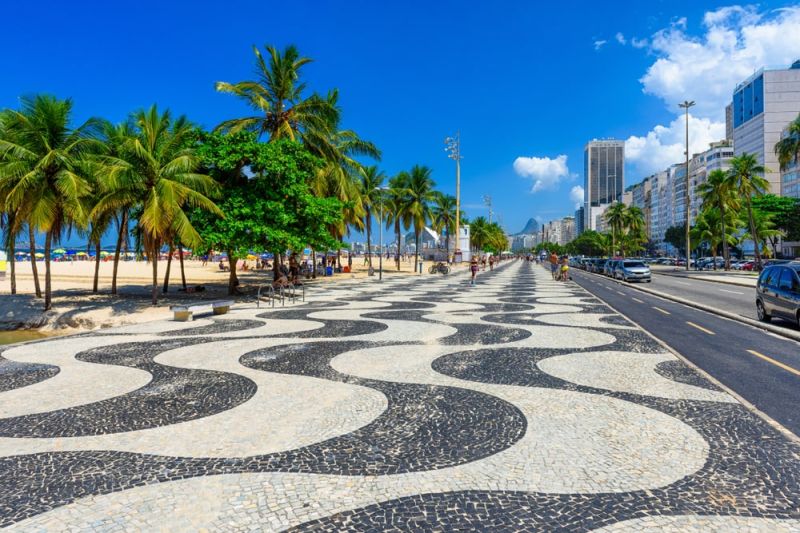
Photo: Catarina Belova / Shutterstock.com
A destination management company (DMC) in Brazil is a locally based specialist that turns your brief into a working program. It designs the itinerary, negotiates and contracts local suppliers, manages the logistics and stays with your group on the ground until the last transfer. It works business to business, behind your brand, so your client experiences your company while the DMC handles the execution.
The distinction matters because a DMC is neither a booking engine nor a retail travel agency. Its value lies in three assets that cannot be bought online: local knowledge, supplier leverage and people on the ground. Local knowledge means knowing which hotel handles a 200-room block gracefully and which one struggles, how long the drive from Galeão airport to Copacabana really takes at 6 p.m., or which restaurant can close for a private dinner on a Saturday. Supplier leverage comes from volume and long relationships, which translate into better rates, priority access and faster problem solving. And people on the ground are the guides, hosts and operations staff who solve issues in Portuguese, in real time, before your client ever notices them.
In the trade you will also see DMCs described as inbound operators, receptive operators or ground handlers. The labels overlap, but a full-service DMC goes beyond handling arrivals: it shapes the program creatively, carries the operational risk and answers for every supplier it brings in.
Put simply, working with a DMC means outsourcing the entire supply side of Brazil to one partner who answers for all of it. You keep the client relationship, the creative direction and the margin structure you agreed. The DMC carries the operational load.
Why Brazil rewards working with a local DMC
Brazil combines continental scale, four time zones, a fragmented supplier landscape and a language most visitors do not speak. A local DMC absorbs that complexity: it knows which suppliers perform in each city, how long transfers really take and which local rules apply to events, venues and protected areas.
Some destinations can be operated reasonably well from a desk abroad. Brazil is not one of them, for reasons that become obvious the moment a program leaves a single city.
- Scale. Brazil covers about 8.5 million square kilometers, more than the contiguous United States and roughly twice the area of the European Union. A nonstop flight from São Paulo to Manaus takes around four hours. Multi-destination itineraries are really domestic aviation projects, and they need someone who manages flight blocks, connection buffers and luggage logistics as a routine.
- Demand is at a record high. According to Embratur, Brazil's tourism promotion agency, the country welcomed more than 9 million international visitors in 2025 for the first time, about 40% more than in 2024. More demand means more competition for the best hotels, venues and guides, particularly on peak dates. A DMC with long-standing allocations and relationships secures inventory that a newcomer simply cannot reach.
- Language. Portuguese is the working language of nearly every supplier outside premium hospitality. English is common in top hotels, but much less so among drivers, venue crews, small restaurants and local authorities. A DMC removes that friction entirely.
- Fragmented suppliers. Transport companies, guides and event suppliers are largely regional. Quality varies widely, and the best operators in Rio are not the best in Salvador or Manaus. A nationwide DMC has already done that vetting in every city.
- Local rules. Events in public spaces need municipal permits, protected areas such as national parks have their own access rules and fees, and professional tourist guides must be registered with Cadastur, the Ministry of Tourism's official registry. A DMC keeps your program compliant without you having to learn Brazilian regulation.
Where a DMC sits in the inbound chain
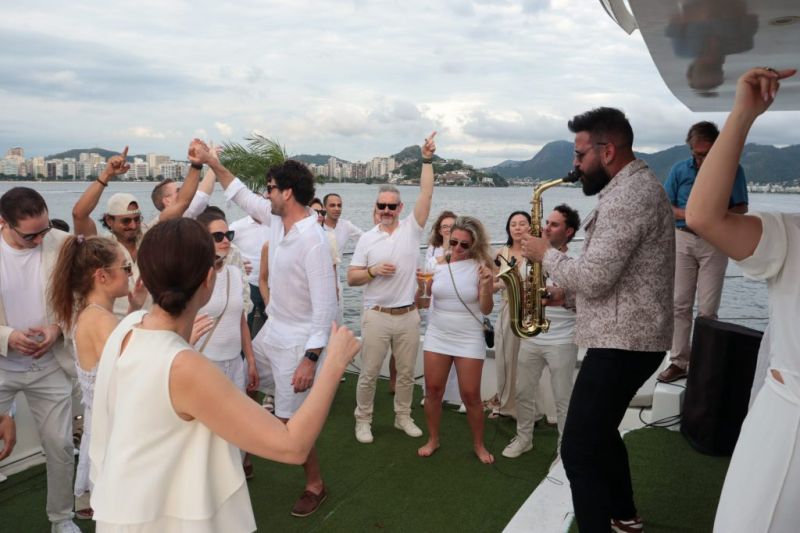
Photo: Guilherme Ferreira / Blumar DMC
In an inbound program, the end client buys from you, you brief the DMC, and the DMC contracts and manages local suppliers. Requests flow down that chain and accountability flows back up to you: one proposal, one point of contact and one invoice, instead of dozens of Brazilian suppliers to manage on your own.
Not every program needs the same structure. If you are weighing a global network against an independent local partner, our comparison of global DMC networks vs independent local DMCs shows when each model fits.
This is the model that makes Brazil scalable for international sellers. Your client never deals with the DMC directly unless you want them to. The DMC operates under your brand, with your standards, and absorbs the complexity of contracting hotels, fleets, guides, restaurants, venues and production crews. When something changes, and in live operations something always changes, you make one call.
Where people get confused is the difference between a DMC, a tour operator and a travel agency. In short, the agency sells, the tour operator packages and the DMC operates locally, though many companies combine roles. We break this down in detail in our guide to DMC vs tour operator vs travel agency in Brazil.
| Travel agency | Tour operator | DMC in Brazil | |
|---|---|---|---|
| Main role | Sells travel to the end client | Packages and distributes travel products | Designs and operates programs on the ground |
| Who it serves | Travelers | Agencies and travelers | Operators, agencies and planners (B2B) |
| Geographic focus | Many destinations | Many destinations | One destination, in depth |
| Contracts local suppliers | Rarely | Sometimes, often through a DMC | Always, directly |
| Team on site | No | Rarely | Yes, with a 24/7 line |
What a full-service DMC in Brazil should handle
A full-service DMC covers the whole operational stack: program design and costing, hotel contracting, ground transport, guides and hosts, venues and events, curated experiences, permits and logistics, supplier vetting, round-the-clock on-site support and a post-program report.
Use this list as a baseline when you compare proposals. If a candidate cannot deliver one of these areas in-house, ask who will, and how that supplier is managed.
- Program design and costing. A creative itinerary built around your objectives, with transparent costing and options at different budget levels, not a generic catalog tour.
- Hotel contracting. Group rates, room blocks, attrition and cutoff terms, rooming lists and VIP amenities, negotiated by people who know each property's real capacity.
- Ground transportation. Fleet sizing, routing that accounts for real traffic, airport meet and greet with signage, luggage handling and backup vehicles on standby.
- Guides and hosts. Licensed, multilingual guides registered with Cadastur, plus hospitality hosts for check-in desks, transfers and events.
- Venues and events. Gala dinners, product launches, private openings of museums or landmarks, with production, staging, catering and entertainment under one contract.
- Curated experiences. Access your client cannot book alone: a private viewing at sunrise, a chef's table in a closed restaurant, a cultural encounter designed with local communities.
- Permits and logistics. Municipal permits for events, protected-area access, domestic flight blocks and the timing details that keep a multi-city program on schedule.
- On-site management. A hospitality desk, daily operational briefings and a 24/7 emergency line staffed by people who can make decisions.
- Financial administration. Clear deposit schedules, international invoicing and a single final reconciliation, so you are not paying dozens of suppliers in Brazilian reais.
- Post-program report. Feedback, incident log and final accounts, which feed directly into your next program.
How to choose a DMC in Brazil: the vetting scorecard
Score every candidate on seven criteria: in-house operations, nationwide coverage, 24/7 emergency response, supplier vetting and safety, contracts and payments, language and culture, and references. Each criterion comes with a question to ask and a red flag to watch for.
Three of these criteria deserve extra weight because they predict how a program behaves under pressure.
In-house operations tell you who carries the risk. Many companies present themselves as DMCs but subcontract the actual operation to smaller local players, which adds a layer between you and the people on the ground. Subcontracting is not wrong in itself, but you should know exactly where it happens and who supervises it.
Nationwide coverage matters because Brazil programs rarely stay in one city. A partner that operates Rio and São Paulo directly but outsources the Amazon or Iguassu Falls will give you two different service standards inside the same itinerary.
A real 24/7 emergency line is the clearest test of operational maturity. Ask who answers, what authority they have to spend money and change plans, and how incidents were handled on a recent program. The answer will tell you more than any brochure.
For the full list of questions, including the ones most planners forget to ask, see how to choose a DMC in Brazil: 12 questions to ask before you sign.
Red flags that should end the conversation
Walk away from a DMC that cannot name who will be on site, subcontracts entire destinations without saying so, quotes far below the market without explaining why, or avoids putting cancellation and payment terms in writing.
- A price that is too good. In a market with record demand, a quote 20% or 30% below every other proposal usually means lower-category suppliers, missing services or costs that will reappear later as "extras". Ask for a line-by-line comparison.
- Vague answers about the on-site team. "We will assign someone" is not an answer. You should know the operations manager responsible for your group before you sign.
- No written contract. Deposit schedules, cancellation fees, attrition and force majeure must be on paper. Verbal assurances do not survive a real problem.
- Resistance to a site inspection. A confident DMC welcomes a planner on the ground. Hesitation suggests the reality does not match the proposal.
- Slow, inconsistent responses during the sales process. Pre-sale responsiveness is the best preview you will get of how the company will respond in live operations.
Brazil's key destinations for groups, and what each asks of your DMC

Photo: Paulo Nabas / Shutterstock.com
Rio de Janeiro and São Paulo anchor most programs, Iguassu Falls delivers the signature wow moment, the Amazon and the Pantanal demand specialized logistics, and the Northeast coast offers resort-style incentives. Each destination tests a different DMC capability, from venue access in Rio to river logistics in the Amazon.
Three destinations have their own guides: Iguassu Falls for incentives and events and the Amazon for groups and Salvador, Bahia.
| Destination | Best for | What it demands from your DMC |
|---|---|---|
| Rio de Janeiro | Incentives, galas, Carnival programs | Exclusive venue access, traffic-aware routing, peak-date inventory |
| São Paulo | Corporate meetings, congresses, gastronomy | Convention logistics, large hotel blocks, executive transport |
| Iguassu Falls | Signature experiences, add-ons | Brazil and Argentina side logistics, timed park access |
| Amazon (Manaus) | Exclusive nature programs | River logistics, limited lodge capacity, health and safety protocols |
| Pantanal | Wildlife and photography | Seasonal access, remote transfers, small-group operations |
| Salvador and the Northeast | Culture, beach resorts | Resort contracting, regional flights, cultural programming |
Rio and São Paulo deserve their own deep dives, and we cover them in our guides to working with a DMC in Rio de Janeiro and a DMC in São Paulo. For inspiration beyond the classic circuit, see the most sought-after destinations in Brazil for 2027, our guide to the Route of Emotions and our take on Trancoso, one of the Northeast's most refined bases for small luxury groups.
When to engage your DMC: lead times that protect your budget
Bring your DMC in 12 to 24 months ahead for large congresses, 12 to 18 months for Carnival or New Year's Eve in Rio, 9 to 12 months for incentives, 6 to 9 months for corporate meetings and 3 to 6 months for luxury independent travel. Earlier engagement secures inventory and rates, especially on peak dates.
The calendar matters as much as the lead time. Our guide to the best time to bring groups to Brazil maps weather by region, the 2027 holidays and the price windows worth targeting.
Lead time is the variable planners underestimate most. In a record-demand market, the best hotels in Rio commit their group inventory for peak periods early, and the venues that make an incentive unforgettable are booked months in advance. Engaging your DMC early does not mean committing your budget early: it means securing options while they still exist. A good DMC will hold space, negotiate release dates that protect you, and tell you honestly when a date is already compromised.
For 2027, mark the calendar now. Carnival runs from Saturday, February 6, to Tuesday, February 9, with Ash Wednesday on February 10. Rio's New Year's Eve on Copacabana beach is the other date that sells out first. If either is on your client's wish list, the right time to start talking to a DMC was yesterday.
Entry requirements to flag early
Since April 10, 2025, citizens of the United States, Canada and Australia need an electronic visa to visit Brazil. It is requested online, costs US$80.90 and typically takes around five business days, so it belongs on your pre-departure checklist from the first proposal.
The e-visa is issued through Brazil's official online platform, and its validity depends on nationality and passport validity: up to 10 years for US citizens and up to 5 years for Canadian and Australian citizens, with stays of up to 90 days. A new passport requires a new e-visa. Most European and South American travelers remain visa-exempt for tourism and business visits, but nationality rules change, so confirm requirements for every passport in your group on official consular channels well before departure.
For groups, the practical risk is not the visa itself but the one participant who leaves it to the last week. A good DMC will flag this in the proposal and remind you at the right milestones.
How the proposal process works
A professional DMC process moves through six stages: brief, proposal, site inspection, contracting, operation and post-program report. The quality of your brief sets the quality of the first proposal, so share budget range, dates, group profile and objectives from the start.
Two of those stages have their own guides: what happens on a site inspection in Brazil and how contracting and payments work, from invoice currency to the contract terms to ask for. For a real example of the whole process, see our case study on IATA's 82nd AGM in Rio.
- Brief. Dates (and flexibility), group size, budget per person, objectives, participant profile, must-haves and deal-breakers. The more context, the fewer revision rounds.
- Proposal. A tailored itinerary with costing, options, inclusions and terms. Expect alternatives at different price points, not a single take-it-or-leave-it quote.
- Site inspection. For incentives and events, seeing the hotels, venues and routes in person is the best investment in the program. It also lets you meet the team that will operate it.
- Contracting. Deposit schedule, cancellation and attrition terms, insurance, force majeure and the final rooming and payment deadlines.
- Operation. Hospitality desk, daily briefings, real-time adjustments and the 24/7 line until the last departure.
- Post-program report. Participant feedback, incident log and final reconciliation, ready for your next proposal.
If you work with formal requests for proposal, our guide on how to write an RFP for a Brazilian DMC includes a checklist you can adapt.
Why planners choose Blumar
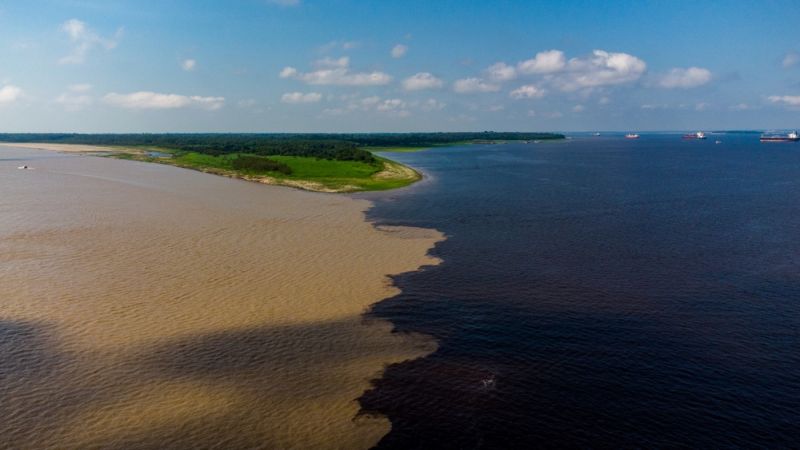
Photo: RomainDI / Shutterstock.com
Blumar is Brazil's largest inbound DMC, headquartered in Rio de Janeiro and operating programs across the country for tour operators, travel advisors and incentive and meeting planners. Our teams design, contract and run programs on the ground, with one accountable partner from the first brief to the final report.
We have been operating Brazil for more than 40 years, and we meet buyers in person every year at international trade shows such as WTM London and TTG Travel Experience. Everything in this guide reflects how we work: in-house operations, nationwide reach, a 24/7 line staffed by people who can make decisions, and the honesty to tell you when a date, a hotel or an idea is not right for your group. If you are planning a program in Brazil, we would be glad to review your brief. Founded in Rio de Janeiro in 1985, Blumar is a Virtuoso Preferred partner and an associate member of USTOA, and its partnerships include IATA, IGLTA, BLTA (Brazilian Luxury Travel Association), Embratur and Visit Rio.
A few facts behind that promise: a multilingual team operating in more than 30 destinations across Brazil, from the Amazon to Fernando de Noronha; dedicated MICE and Congresses & Events departments, which have handled more than 700 events in 24 Brazilian cities, including IATA's 82nd Annual General Meeting in Rio de Janeiro in 2026, as official agency; incentive programs since 2000; preferred partnerships with Brazil's major hotels; and For a Better World, our sustainability program, which includes curated suppliers involved in sustainability initiatives and support for Tomorrow's Air. Every year, our team meets partners at ITB Berlin, WTM London, ILTM, IMEX and Virtuoso events.
Posts you might also be interested in:
- Blumar DMC at TTG Travel Experience 2026: Brazil at the Heart of Italy's Global Tourism Marketplace
- New Year’s Eve in Rio de Janeiro with Blumar DMC
- Destination Management Company Brazil: Why Blumar DMC is the Leading Choice
- What Is the Best DMC in South America? How to Choose One in 2026
- DMC in Rio de Janeiro: Why the Marvelous City Needs a Local Partner
FAQ - DMC in Brazil
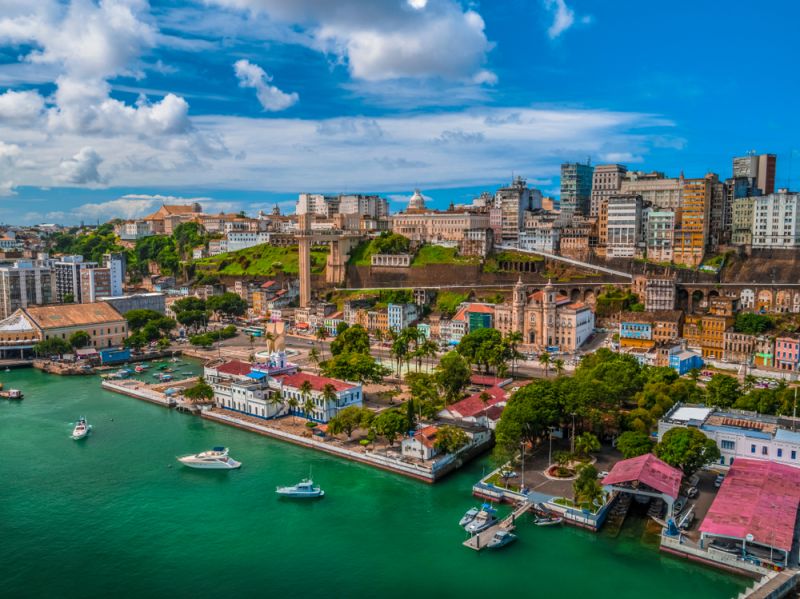
Photo: Peu Ribeiro / Shutterstock.com
What does DMC stand for in travel?
DMC stands for destination management company: a locally based specialist that designs, contracts and operates travel programs for operators, advisors and planners based elsewhere. In Brazil, DMCs are also called inbound or receptive operators.
What is the difference between a DMC and a tour operator?
A tour operator usually packages and sells travel products, often for many destinations, while a DMC specializes in one destination and handles the local design, contracting and operation. Many tour operators work with a DMC in Brazil to run their programs on the ground. See our full comparison.
Do I need a DMC to run a group program in Brazil?
It is not legally required, but for groups, incentives and events it is strongly recommended. The country's scale, language and fragmented supplier landscape make direct contracting slow and risky, and a DMC gives you one accountable partner for every local service.
How much does a DMC in Brazil cost?
Most DMCs build their margin into the program price rather than charging a separate fee, so you receive a total cost per person or per program. Costs depend on dates, group size, hotel category and services. Ask for clear inclusions and a line-by-line breakdown so you can compare proposals fairly.
How far in advance should I contact a DMC in Brazil?
Plan on 9 to 12 months for incentives, 12 to 24 months for large congresses, 6 to 9 months for corporate meetings and 3 to 6 months for luxury independent travel. For Carnival or New Year's Eve in Rio, start 12 to 18 months ahead.
Can one DMC cover all of Brazil?
Yes, if it has nationwide operations. Ask which destinations the company operates directly and which it subcontracts, so you know whether your whole itinerary will receive the same service standard.
Is Brazil safe for group travel?
Brazil welcomed more than 9 million international visitors in 2025, and group programs run safely when risk is managed professionally: vetted transport, briefed guides, sensible routing and a 24/7 response line. Safety is precisely one of the areas where a local DMC adds the most value.
Do travelers need a visa to visit Brazil?
Citizens of the United States, Canada and Australia need an e-visa since April 10, 2025, which costs US$80.90 and is requested online. Most European and South American travelers are visa-exempt for tourism and business stays, but always confirm requirements for each nationality on official channels.
What should I include in a brief to a DMC?
Dates and flexibility, group size, budget per person, objectives, participant profile, must-have experiences and any restrictions. A complete brief shortens the proposal cycle and leads to a more accurate first quote.
Should a DMC in Brazil be registered with any authority?
Yes. Tourism companies in Brazil must be registered with Cadastur, the Ministry of Tourism's official registry, and professional tourist guides must be registered as well. Asking for these registrations is a quick, objective check during vetting.
What happens if something goes wrong during the program?
A professional DMC activates its 24/7 emergency line, makes decisions on the spot and keeps you informed in real time. Before signing, ask how a recent incident was handled: it is the most revealing question in the whole vetting process.