Português
 English
 Español
 Français
 Deutsch
 Italiano
 日本語
 العربية
 中文

Every DMC proposal looks good on paper. The hotels are beautiful, the itinerary flows, the price fits the budget. The difference between a partner you can trust with a 200-person incentive and one that will leave you managing a crisis from another time zone rarely shows up in the PDF. It shows up in how the company answers a handful of direct questions. This guide gives you the 12 questions that experienced planners ask before they sign with a DMC in Brazil, why each one matters, what a strong answer sounds like and which reply should make you walk away. Use it on your next discovery call, or copy it into your RFP.
In short: to choose a DMC in Brazil, ask 12 questions grouped in four areas. Operations: who runs your program on site, which destinations they operate directly and who answers at 3 a.m. Safety and risk: how they vet drivers, vehicles and guides, which insurance and incident protocols they have, and what their plan B is. Money and contracts: what is really included, the deposit and cancellation terms, and how they invoice. Fit and proof: a reference from a similar program, a single point of contact and what they would change in your brief. Score each answer from 1 to 5 and give double weight to questions 1, 3, 4 and 8.
Why the questions matter more than the proposal
A proposal is a sales document: it tells you what a DMC intends to deliver. The answers to specific, uncomfortable questions tell you how the company actually operates, who carries the risk and what happens when plans change. That is where reliable and risky DMCs separate.
Brazil is a demanding destination to operate. The country is larger than the contiguous United States, suppliers vary widely from city to city, and demand is at a record high: according to Embratur, Brazil welcomed more than 9 million international visitors in 2025, about 40% more than the year before. In that environment, the quality of your DMC determines whether your program runs on rails or on improvisation. If you are still mapping what a DMC does and where it fits in your supply chain, start with our complete guide to choosing a DMC in Brazil. This article goes one level deeper, into the conversation itself.
The 12 questions below are grouped into four areas of risk. Four of them are marked as critical, because the answers predict most of what will go right or wrong in live operation.
Operations: who actually runs your program
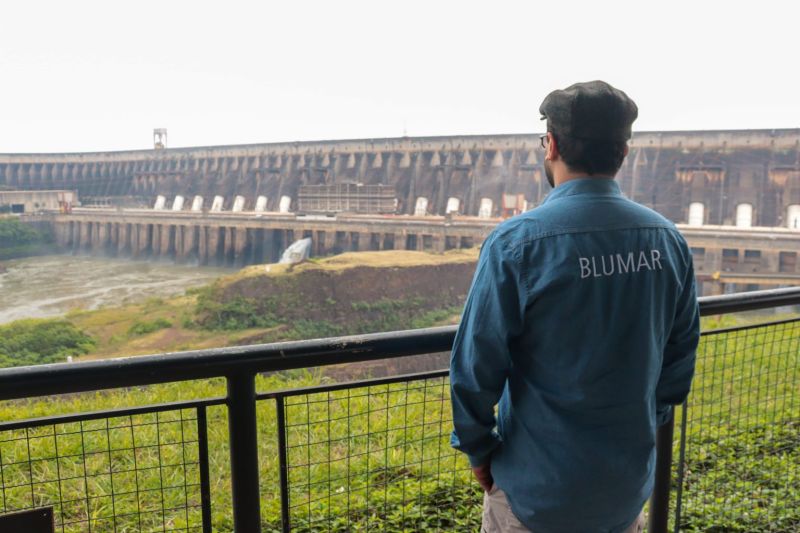
Photo: Guilherme Ferreira / Blumar DMC
The first three questions reveal who carries the operational risk: the named people on the ground, the destinations the company operates with its own teams and the real-time response when something breaks outside office hours.
1. Who will run my program on site, by name?
Why it matters. Your program will be as good as the operations manager who runs it. Many companies sell as DMCs but hand the day-to-day operation to smaller local suppliers, so the people you meet in the sales process are not the ones on the ground.
A strong answer names a person or at least a role and a team, explains their experience with programs like yours and offers to introduce them before you sign, ideally during the site inspection.
Red flag: "We will assign someone closer to the date." That usually means nobody has been allocated, or the operation will be outsourced.
2. Which destinations do you operate directly, and which do you subcontract?
Why it matters. Brazil programs rarely stay in one city. A DMC that runs Rio de Janeiro with its own staff but subcontracts the Amazon or Iguassu Falls will deliver two different service standards inside the same itinerary.
A strong answer is specific: which cities have in-house teams, which services rely on partners, and how those partners are selected and supervised. Subcontracting is normal for specialized services such as Amazon lodges; hiding it is not.
Red flag: "We cover all of Brazil," with no detail. Coverage without names, teams or processes is a sales line, not an operation.
3. Who answers at 3 a.m. when something goes wrong?
Why it matters. Flights get cancelled at night, a guest falls ill on a Sunday, a road closes on the way to the airport. The value of a DMC is concentrated in those moments, and they rarely happen during office hours.
A strong answer describes a 24/7 duty line staffed by someone with authority to spend money and change plans, gives you the number in writing and walks you through a real incident from a recent program.
Red flag: "Send us an email and we'll reply first thing in the morning." That is a sales office, not an operations team.
Safety and risk: how they protect your group

Photo: Irlen Menezes / Blumar DMC
Questions four to six test the invisible work: how transport, drivers and guides are vetted, which insurance and incident protocols exist, and what the contingency plan is for weather, strikes or closures.
4. How do you vet drivers, vehicles and guides?
Why it matters. Ground transport is where most operational risk lives in group travel, and guide quality shapes how participants remember the destination. Vetting standards are rarely visible in a proposal, so you have to ask.
A strong answer describes written standards: vehicle age and maintenance checks, driver experience and briefing, backup vehicles on standby, and guides registered with Cadastur, the Ministry of Tourism's official registry for tourism providers. Ask whether the DMC itself is registered too; it is a quick, objective check.
Red flag: "We only work with good suppliers," without any documented process behind it.
5. What insurance and incident protocols do you have?
Why it matters. When something serious happens, the response in the first hour matters more than anything written in a brochure. You need to know who decides, who informs you and what coverage is in place.
A strong answer covers liability insurance, a written incident protocol (medical, security, lost documents), escalation contacts and how you will be kept informed in real time. Ask for the protocol document itself.
Red flag: hesitation, or an answer that shifts every responsibility to the hotel or the airline.
6. What is your plan B for weather, strikes or closures?
Why it matters. Rio's summer brings heavy afternoon rain, river levels in the Amazon change through the year and national parks can close access at short notice. Outdoor moments need alternatives designed in advance, not improvised on the day.
A strong answer includes specific alternatives for each key outdoor experience in your itinerary, with the cost implications explained up front.
Red flag: "We'll figure it out if it happens."
Money and contracts: what you are really buying

Photo: Bildagentur Zoonar GmbH / Shutterstock.com
Questions seven to nine protect your margin and your client: what is included and what might appear later as an extra, the deposit and cancellation schedule in writing, and how the DMC invoices you.
7. What exactly is included, and what could appear as an extra?
Why it matters. Two proposals at the same price can describe very different programs. The gaps tend to hide in tips, porterage, waiting time for delayed flights, overtime for guides and drivers, and taxes.
A strong answer is a line-by-line breakdown with clear inclusions and exclusions, plus a list of the variable costs that might apply and how they are calculated.
Red flag: a single package price with vague inclusions, or a quote 20% to 30% below every competitor without a convincing explanation.
8. What are your deposit, cancellation and attrition terms?
Why it matters. This is where unpleasant surprises turn into real losses. Hotels and venues in Brazil commit inventory with their own deposit schedules, and your contract with the DMC should mirror them transparently.
A strong answer puts everything in writing before you commit: deposit dates, cutoff and release dates for room blocks, attrition allowances, cancellation fees by period and force majeure clauses.
Red flag: "Don't worry, we're flexible." Flexibility that is not written down will not survive a real problem.
9. How, and in which currency, do you invoice?
Why it matters. Currency, payment method and invoicing format affect your costs, your accounting and your exposure to exchange-rate swings. International buyers should not have to pay dozens of suppliers in Brazilian reais.
A strong answer explains the invoicing currency, accepted payment methods, the payment schedule and how final reconciliation works after the program.
Red flag: requests for cash payments, personal accounts or invoicing that does not match the contracting company.
Fit and proof: will they deliver your program

Photo: Guilherme Ferreira / Blumar DMC
The last three questions test fit: a verifiable reference from a similar program, a single accountable point of contact from proposal to final report, and the honesty to challenge your brief.
10. Can I speak with a client who ran a similar program?
Why it matters. A gala for 300 in Rio and a 12-person luxury circuit through the Amazon require different skills. Experience with your type of program is worth more than a long client list.
A strong answer offers a reference you can actually call, from a program similar in size, profile and destinations, within the last year or two.
Red flag: only logos on a slide, or references that never answer.
11. Who is my single point of contact, from proposal to final report?
Why it matters. Programs fail in the handovers: from sales to operations, from one city team to another. A single accountable contact reduces the information lost along the way.
A strong answer names your account manager, explains how the handover to operations works and commits to a response time during planning and during the program.
Red flag: a different person every time you write, and slow replies during the sales process. Pre-sale responsiveness is the best preview of live operations.
12. What would you change in my brief?
Why it matters. This is the question most planners never ask, and the most revealing one. A DMC that knows the destination will spot the transfer that is too long, the venue that is noisy on Fridays or the date that collides with a local holiday.
A strong answer challenges at least one assumption with a specific, local reason, and proposes an alternative that improves the experience or the budget.
Red flag: "Nothing, it's perfect." Either they have not read the brief carefully, or they are telling you what you want to hear.
How to score the answers
Ask every candidate the same 12 questions, score each answer from 1 to 5 and give double weight to the four critical questions: on-site team (1), 24/7 response (3), supplier vetting (4) and contract terms (8). Compare the weighted totals alongside the price, never the price alone.
Scoring turns a gut feeling into a decision you can defend to your client or your finance team. A simple scale works well: 5 for a specific, documented answer; 3 for a reasonable answer without evidence; 1 for a vague or evasive answer. In the example below, the cheaper DMC looks attractive until you score it: it falls apart exactly on the critical points.
| Score | What the answer looks like | Example |
|---|---|---|
| 5 | Specific, documented and verifiable | Names the on-site manager and offers an introduction |
| 3 | Reasonable, but without evidence | "An experienced coordinator will be assigned" |
| 1 | Vague, evasive or contradictory | "We'll assign someone closer to the date" |
From shortlist to signature: a realistic vetting timeline
A careful vetting process takes six to eight weeks: shortlist three DMCs, send the same brief, run a discovery call with the 12 questions, score the proposals, do a site inspection and sign a written contract. For incentives and large events, start this process 9 to 12 months before travel.
The timeline is not bureaucracy. Each step removes a specific risk: the shortlist filters out companies without nationwide operations, the identical brief makes proposals comparable, the call tests the people behind the PDF, the site inspection confirms that reality matches the proposal, and the written contract protects you when something changes. If you work with formal requests for proposal, our guide on how to write an RFP for a Brazilian DMC turns these questions into a ready-to-send document.
Mistakes planners make when choosing a DMC
The most expensive mistakes are choosing on price alone, comparing proposals built from different briefs, skipping the site inspection and accepting verbal promises instead of written terms.
- Choosing on price alone. In a record-demand market, an unusually low quote usually hides lower-category suppliers, missing services or costs that reappear later.
- Sending different briefs to different DMCs. If each candidate quotes a slightly different program, you are comparing interpretations, not partners.
- Skipping the site inspection. For incentives and events, seeing the hotels, venues and routes in person is the best investment in the program.
- Accepting verbal promises. Anything that matters, from attrition to the on-site team, belongs in the contract.
- Ignoring how the sales process feels. Slow, inconsistent replies before signing rarely improve after it.
Ask Blumar these 12 questions
Blumar is Brazil's largest inbound DMC, headquartered in Rio de Janeiro and operating programs nationwide for tour operators, travel advisors and incentive and meeting planners. We wrote this checklist because we want to be measured by it.
We have been operating Brazil for more than 40 years, with in-house teams, a 24/7 line staffed by people who can make decisions, and the habit of telling clients when a date, a hotel or an idea is not right for their group. Put us through the 12 questions on your next program. We would be glad to answer every one of them in writing. Founded in Rio de Janeiro in 1985, Blumar is a Virtuoso Preferred partner and an associate member of USTOA, and its partnerships include IATA, IGLTA, BLTA (Brazilian Luxury Travel Association), Embratur and Visit Rio.
Some of our answers, in short: own teams in more than 30 destinations across Brazil; a 24/7 line answered by people with the authority to decide; preferred partnerships with Brazil's major hotels; more than 700 congresses and events delivered, including IATA's 82nd Annual General Meeting in 2026 as official agency; and For a Better World, a sustainability program with curated suppliers involved in sustainability initiatives.
Posts you might also be interested in:
- Blumar DMC at TTG Travel Experience 2026: Brazil at the Heart of Italy's Global Tourism Marketplace
- New Year’s Eve in Rio de Janeiro with Blumar DMC
- Destination Management Company Brazil: Why Blumar DMC is the Leading Choice
- What Is the Best DMC in South America? How to Choose One in 2026
- DMC in Rio de Janeiro: Why the Marvelous City Needs a Local Partner
Frequently asked questions - How to Choose a DMC in Brazil

Photo: Galyna Andrushko / Shutterstock.com
What questions should I ask a DMC before hiring them?
Ask about the on-site team, which destinations they operate directly, their 24/7 response, how they vet suppliers, insurance and incident protocols, contingency plans, inclusions, contract terms, invoicing, references, your point of contact and what they would change in your brief. Those 12 questions cover operations, safety, money and fit.
What is the most important question to ask a DMC?
"Who will run my program on site, by name?" It reveals whether the company operates with its own team or outsources the operation, and it tells you who will actually be with your group. "What would you change in my brief?" is a close second, because it tests local knowledge and honesty.
How many DMCs should I compare?
Three is usually the right number: enough to compare approaches and prices, few enough to evaluate each one properly. Send all three the same brief so the proposals are comparable.
How do I compare DMC proposals fairly?
Send the same brief to every candidate, ask for line-by-line costing with clear inclusions, score the answers to the 12 questions and compare weighted totals alongside the price. Never compare a total price without checking what each proposal actually includes.
What are the red flags when choosing a DMC in Brazil?
Vague answers about who will be on site, unexplained subcontracting, a price far below the market, no written cancellation terms, no 24/7 line and resistance to a site inspection. Slow replies during the sales process are also a reliable warning sign.
Should a DMC in Brazil be registered with Cadastur?
Yes. Tourism companies and professional tourist guides in Brazil must be registered with Cadastur, the Ministry of Tourism's official registry. Asking for the registration is a quick, objective check during vetting.
How long does it take to choose a DMC?
A careful process usually takes six to eight weeks from shortlist to signed contract. For incentives and large events, start 9 to 12 months before travel so that vetting does not eat into the time needed to secure hotels and venues.
Is a site inspection necessary?
For incentives, events and large groups, yes. It confirms that hotels, venues and routes match the proposal, and it lets you meet the team that will operate your program. For smaller luxury trips, a detailed video walkthrough can sometimes replace it.
Can I use these questions in an RFP?
Yes. The 12 questions work well as the qualification section of an RFP, followed by your program brief and the costing format you want. Asking every candidate to answer in writing makes scoring easier and creates a record you can refer back to.
What should a good DMC ask me in return?
A good DMC asks about your objectives, participant profile, budget per person, flexibility on dates and the experiences that matter most to your client. If a DMC quotes without asking anything, the proposal is probably generic.